
Open the official example card to see the Owner Information block in context.
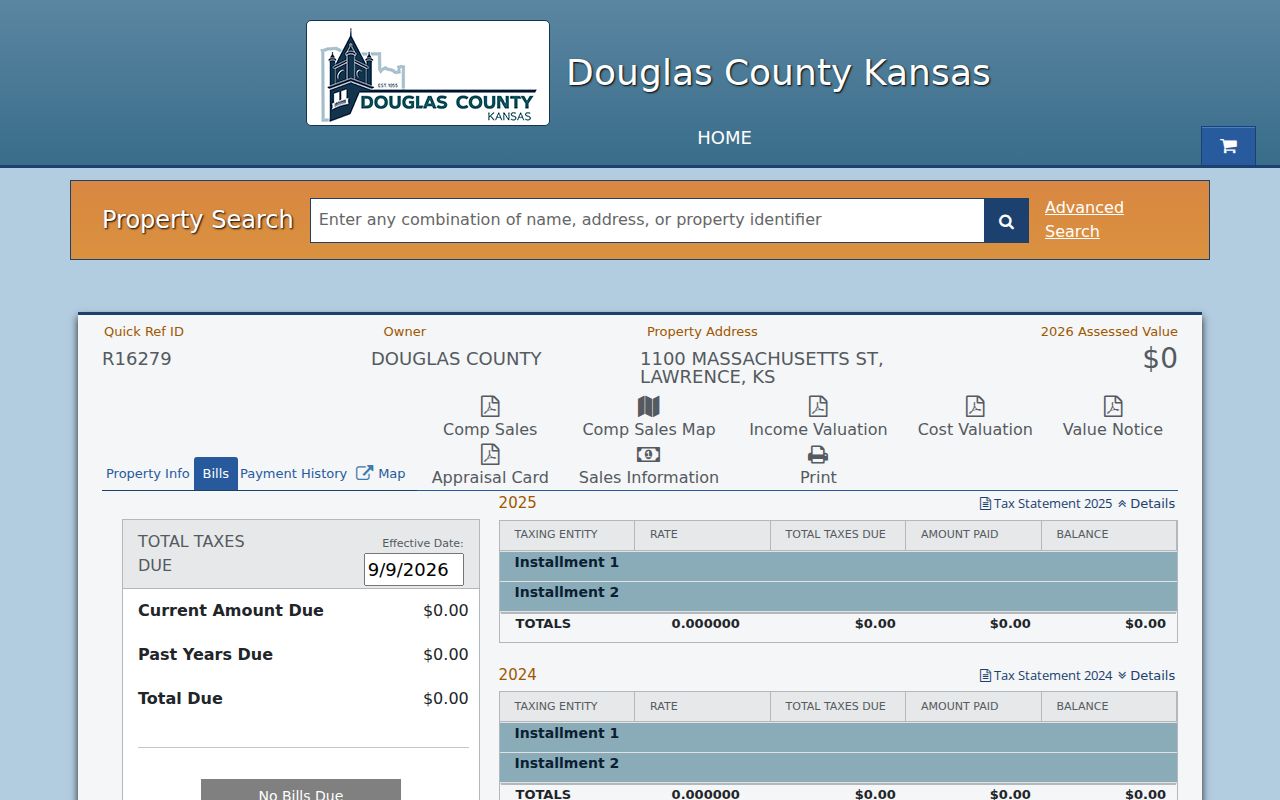
The capture pairs the dated owner field with situs, Quick Ref ID, and PIN.
Douglas County Owner Record Card
The Property Information Owner block lists Owner Name, Owner ID, and Mailing Address. Around it, the header adds situs, Quick Ref ID, property status, and PIN. Together these fields keep three things from blurring together: the legal owner of record, the land itself, and whoever happens to live there.
| Owner of Record | Name shown in the current administrative roll |
|---|---|
| Vesting / Tenancy | How the recorded instrument names the ownership form |
| Mailing Address | Public destination for county notices |
| Situs Address | The physical land address |
| Deed Reference | Latest deed citation to verify |
| Ownership Since | Recording date on the latest matching instrument |
A courthouse example from Douglas County shows Owner ID 0000001022, Quick Ref R16279, and PIN 0230793103013001030. That mailing address is a lawful public contact clue. It is not proof of where anyone lives.
When Douglas County Ownership Lags
The county guarantees no fixed lag between a recorded deed and the roll. Appraisal values refresh in November, and Notices of Value go out around March 1 to whoever the Register of Deeds shows as owner. Neither milestone means every recent conveyance has reached the displayed owner field yet.
Confirm Douglas County Current Owners
Treat the roll card as the present administrative record. Then search Landmark Web for the newest deed, and compare grantee, recording date, book/page, and legal description against the parcel.
- Read Owner Name and parcel keys in Property Information.
- Pull the newest matching deed from Landmark.
- Check an entity name in the Kansas business search.
- Retain the public mailing address and source date.
- Owner of record
- The party named on the current county parcel card.
- Vesting
- The ownership form stated in the recorded instrument.
- Registered agent
- The public statutory contact for a business entity.
Douglas County Protected Addresses
Kansas Safe at Home gives qualifying survivors a substitute mailing address. Respect it. Do not try to infer a protected location by piecing together parcel, voter, or other public files. Property Fraud Alert can tell an owner when a new name match hits, though it cannot stop a recording from happening.
Contact a Douglas County Owner
The public tax mailing address is the right record-based way to reach an owner. Keep any contact tied to a lawful property purpose. The owner field reveals no occupants, no private phone numbers, and grants no right to enter the land.
Lawful use. Use owner data only for a lawful property purpose. Do not stalk, harass, trespass, or infer a protected address.
Douglas County Current Owner Dates
Current depends on the source. The Appraiser's owner field reflects the administrative roll. Landmark records the accepted instrument and exposes its index entry. Note a retrieval date beside the first and a recording date beside the second.
A parcel can show a current tax-roll name. A title exception or court matter may still sit unresolved. Flip it around, and a new deed may be indexed before the roll ever changes. State the mismatch plainly rather than quietly picking one date.
Douglas County Entity Ownership
Property Information lets you search by Owner Name, Business Name, or Owner ID separately. An entity can hold the parcel. The Kansas business search then shows public entity status and registered-agent details. The recorded deed still settles who owns what.
Estates and trusts complicate things. A death certificate, transfer-on-death deed, or personal-representative deed can each shape the current record. Treat the document type as a lead, never a legal conclusion about authority.
Douglas County Certified Owner Evidence
A certified deed copy matters when exact conveyance language or official authentication is required. Give the Register of Deeds the parties, record date, book/page or instrument number, and legal description. That identifies the instrument precisely.
The parcel card still earns its keep for tax notices and a lawful mailing route. It names no occupants. It creates no right to visit the property. And it cannot replace counsel when title is disputed.